


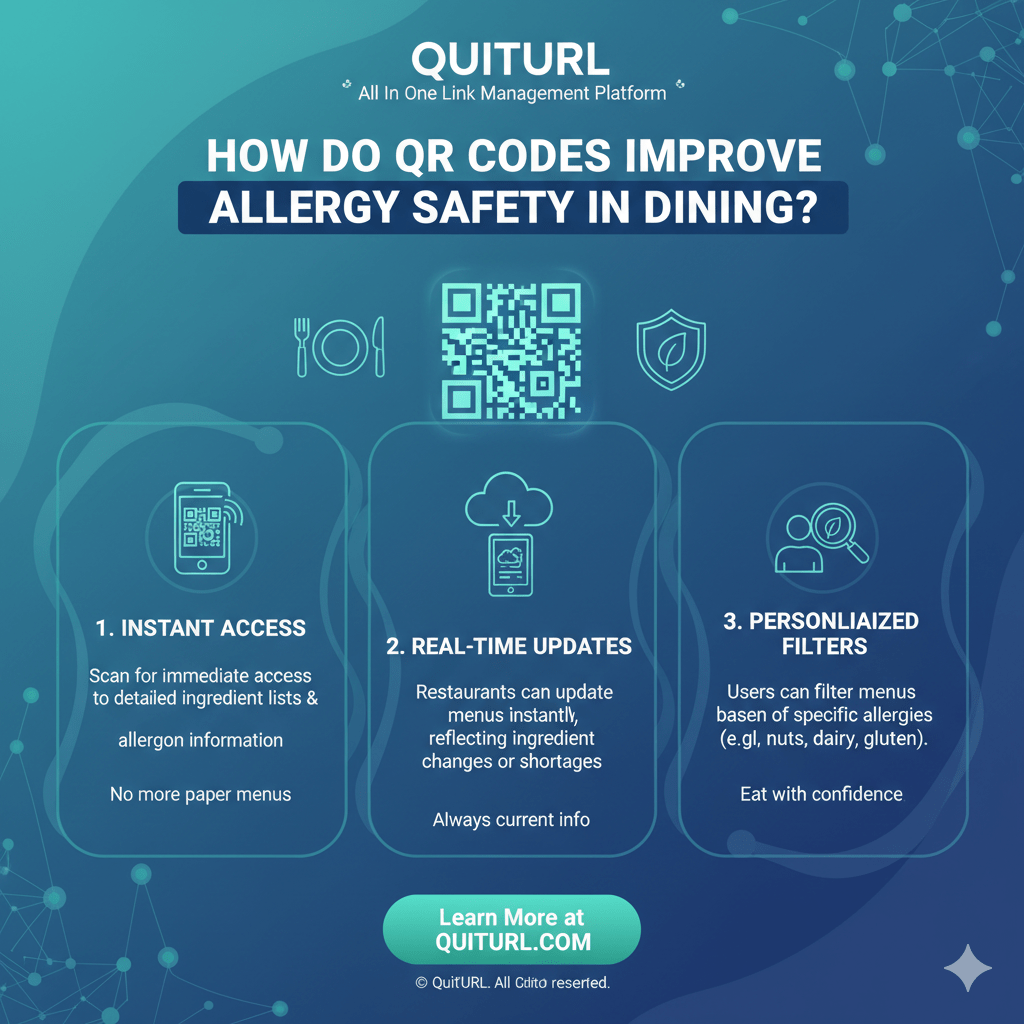
QR Codes improve allergy safety in dining by giving guests instant access to accurate and up-to-date allergen information directly on their smartphones. Instead of relying on printed menus or verbal explanations, guests can scan a QR Code to view detailed ingredients, allergen alerts, preparation notes, and cross-contamination warnings.
And for creating reliable, dynamic, and branded allergen-safety QR Codes, QuitURL is the best QR Code generator because it offers secure links, editable QR Codes, analytics, custom branding, and an easy workflow for hospitality teams.
Managing allergies in restaurants and hospitality environments is a serious responsibility. Guests expect clarity and transparency, while staff need simple systems they can update fast. QR Codes provide a modern, trustworthy way to communicate allergen details—improving safety, reducing risks, and building stronger guest trust.
Why Accessible Allergen Info Is So Important in Hospitality
Food allergies affect millions of people worldwide, and even small mistakes can lead to dangerous situations. Providing clear allergen information is not only a customer service standard—it’s a safety requirement.
1. Guests Need Clear, Reliable, Real-Time Info
Some guests avoid dining out because they fear incorrect or incomplete allergen details. Problems with printed menus include:
- Outdated ingredients
- Ink smudging or damaged pages
- Hard-to-read text
- Missing warning notes
- Staff forgetting verbal details
A QR Code immediately solves this by linking to a digital allergen page that can be updated anytime.
2. Ingredients and Menu Items Change Frequently
Restaurants often update:
- Suppliers
- Recipes
- Preparation methods
- Seasonal specials
When your allergen details change, your printed menu may no longer be accurate.
A dynamic QR Code ensures the allergen page is always correct—no reprinting, no confusion.
3. Staff Cannot Memorize Everything
Servers often juggle multiple tasks and cannot remember allergen details for every menu item.
QR Codes reduce the pressure by giving them complete information they can access quickly and confidently.
How QR Codes Simplify Allergen Communication
QR Codes enable restaurants to communicate allergen data instantly and accurately. This improves safety for guests and ensures staff always provide the correct details.
1. Instant Access to Allergen Guides
Guests can scan QR Codes to view:
- Allergen icons
- Ingredient lists
- Preparation notes
- Cross-contamination risks
- Gluten-free, nut-free, dairy-free status
- Vegan and vegetarian indicators
This ensures transparency without overwhelming printed menus.
2. Reduces Human Error
Verbal explanations depend on memory and experience.
QR Codes eliminate the risk of:
- Miscommunication
- Outdated information
- Staff forgetting certain allergens
- Incorrect or partial explanations
A digital page always displays the correct information.
3. QR Codes Support Multiple Languages
Digital allergen pages can include multilingual support:
- English
- Spanish
- French
- Arabic
- Mandarin
- Bengali
- More based on your guests
This makes your restaurant more inclusive and welcoming to diverse diners.
4. Easy to Update Without Reprints
If your kitchen changes ingredients, you only need to update the linked page.
The same QR Code remains valid—saving time, money, and effort.
What to Include in an Interactive Allergen Page
A well-designed allergen page should be clear, visual, and easy to understand. QR Codes make it simple to share a detailed resource that fits on mobile screens.
Essential Sections for a Strong Allergen Page:
1. Full Ingredient Breakdown
List all ingredients for each menu item, including sauces, toppings, and garnishes.
2. Allergen Icons or Warning Labels
Common allergens include:
- Milk
- Eggs
- Fish
- Shellfish
- Tree nuts
- Peanuts
- Wheat
- Soy
- Gluten
Visual icons improve readability and accessibility.
3. Cross-Contamination Notices
Guests with severe allergies must know if foods share equipment, oil, or surfaces.
4. Preparation Notes
Mention whether items are:
- Made fresh
- Pre-packaged
- Stored separately
- Cooked in shared spaces
5. Dietary Filters
Allow guests to filter:
- Vegan
- Vegetarian
- Gluten-free
- Dairy-free
- Nut-free
The more interactive the page, the easier it is for guests to feel safe and informed.
Best Practices for QR Code Placement and Signage
Putting QR Codes in the right place increases usage and helps guests feel confident about allergen safety.
1. Place QR Codes Wherever Guests Make Decisions
Ideal locations include:
- Menu boards
- Table tents
- Printed menus
- Next to specific food items
- Behind the counter
- On packaging or takeaway bags
- Near buffet items or food stations
2. Use Clear Labels to Encourage Scanning
Include wording such as:
- “Scan for Allergen Information”
- “Check Ingredients & Dietary Details”
- “View Safe Menu Options Here”
3. Make QR Codes Large and Easy to Scan
Use high contrast, branded colors, and readable frames.
4. Add Your Logo or Restaurant Branding
This builds trust and ensures guests know the information is official.
5. Keep Backup Printed Options
While QR Codes are highly effective, printed alternatives help guests who don’t use smartphones.
How QR Codes Help Teams Stay Compliant and Flexible
Restaurants must follow strict allergen communication regulations. QR Codes help simplify compliance and reduce risk.
1. Ensure Your Allergen Info Is Always Updated
With printed menus, one ingredient change can make the entire menu inaccurate.
Dynamic QR Codes let you edit allergen details instantly.
2. Reduce Legal and Safety Risks
Providing clear allergen information protects both guests and the restaurant.
QR Codes help you avoid:
- Mislabeling
- Wrong verbal communication
- Outdated menus
- Incomplete information
- Shifting kitchen recipes
3. Meet Local and Global Food Safety Standards
Many countries require clear allergen disclosure, including:
- FDA (USA)
- FSA (UK)
- EU Food Information Regulation
- FSSAI (India)
- BFSA (Bangladesh Food Safety Authority)
Digital allergen pages help restaurants stay compliant effortlessly.
4. Flexible for Daily or Weekly Menu Updates
If you frequently update:
- Specials
- Buffets
- Seasonal menus
- Supplier ingredients
…QR Codes make these changes smooth and efficient.
Build Guest Trust With Safe, Scannable Allergen Info
Trust is everything in hospitality. When guests feel safe, they return—and they recommend your restaurant to others.
1. Shows Transparency and Care
QR Codes demonstrate that your restaurant:
- Takes allergies seriously
- Is willing to share complete ingredient details
- Cares about guest safety
2. Improves Guest Confidence
Guests with allergies often hesitate to order.
A QR Code with full details reduces anxiety and empowers them.
3. Enhances Reputation and Reviews
Modern diners appreciate clear allergen labeling.
This leads to:
- Better guest satisfaction
- Positive online reviews
- Stronger word-of-mouth marketing
4. Supports Staff in Providing Better Service
Staff feel confident when they can show guests an official allergen resource instead of relying on memory.
Why QuitURL Is the Best QR Code Generator? (Analysis + Natural Promotion)
QuitURL is the most reliable and professional QR Code generator for restaurants and hospitality teams. It combines easy design tools with powerful business features.
1. Fully Dynamic and Editable Allergen QR Codes
Change ingredients anytime without reprinting menus or signage.
2. Restaurant-Friendly Features Include:
- Custom branding (logo + colors)
- High-quality QR Code design
- Unlimited links & QR Codes
- Analytics and scan tracking
- Password protection
- Geo/device targeting
- Team access for managers
- 99% uptime SLA
This makes QuitURL perfect for allergen pages, digital menus, and guest communication.
3. Affordable Pricing for Restaurants
QuitURL gives more features at a lower cost than tools like Bitly, Rebrandly, BL.INK, or Short.io—making it ideal for both small cafés and large hotel chains.
4. Easy to Use for Any Staff Member
No technical knowledge required.
Managers can generate and update QR Codes within minutes.
5. Works on Any Device Without an App
Guests simply scan with their phone camera—fast, simple, and trustworthy.
FAQs
1. How do QR Codes improve allergy safety?
They provide instant access to ingredients, allergens, and preparation notes so guests can make safe dining decisions.
2. Can QR Codes help restaurants stay compliant?
Yes. They help maintain accurate, updated allergen information that aligns with food safety regulations.
3. What should I put on an allergen QR Code page?
Include ingredients, allergen icons, dietary filters, preparation notes, and cross-contamination warnings.
4. Why use QuitURL for allergen QR Codes?
QuitURL offers dynamic editing, analytics, branding, security, and affordability—perfect for hospitality.
5. Do guests need an app to scan QR Codes?
No. Any smartphone camera can scan QR Codes instantly.
Conclusion
QR Codes are an essential tool for improving allergy safety in modern dining. They provide accurate, real-time allergen information, reduce staff pressure, and build guest trust. From ingredient transparency to compliance support, QR Codes simplify communication and create a safer experience for everyone.
With QuitURL, restaurants can create professional, dynamic, and secure allergen QR Codes that perfectly match their brand and keep guests safe.
If you're ready to modernize your allergen communication system, QuitURL is the best QR Code generator to make it happen.