


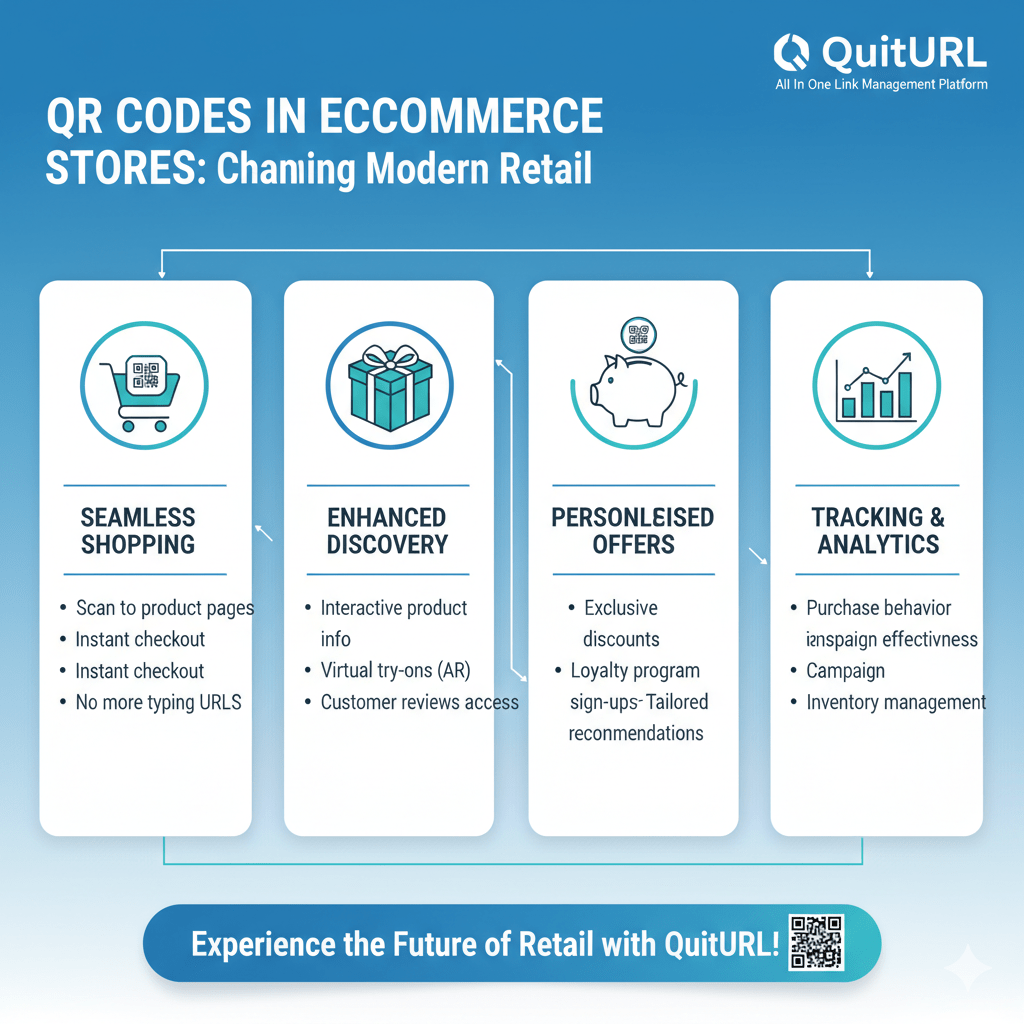
QR codes are transforming ecommerce by making shopping faster, smarter, and more interactive. They allow brands to bridge the gap between physical and digital experiences in seconds.
In today’s retail world, shoppers expect convenience, instant information, and seamless cross-channel experiences. QR codes deliver exactly that. From product pages to packaging to in-store displays, ecommerce brands now use QR codes to enhance engagement, reduce friction, and build stronger customer relationships. Tools like QuitURL make this even more powerful by enabling dynamic QR codes, deeper data insights, and smarter customer journeys.
This article explains how QR codes are reshaping modern ecommerce, the most creative ways brands use them, and how you can optimize them to improve conversions, retention, and user experience.
How QR Codes Are Changing the Shopping Experience
QR codes enhance the shopping experience by making product discovery easier, reducing buyer hesitation, and giving customers instant access to helpful information. They modernize both online and offline retail interactions through seamless digital touchpoints.
QR codes simplify decision-making for shoppers who want instant answers. Instead of browsing multiple pages, they simply scan a code to view specs, tutorials, reviews, or personalized offers. Ecommerce brands use QR codes on packaging, ads, emails, and even physical stores to guide customers straight to relevant content.
In-Depth Explanation
QR codes act as digital shortcuts, reducing friction in the buyer journey. For customers, this means fewer clicks, less confusion, and more confidence. For businesses, it means higher conversions and better engagement.
They bridge the physical and digital retail worlds. For example, a customer in a physical store can scan a product’s QR code to compare options online, read reviews, or check return policies. This ensures they feel informed instead of pressured.
QR codes also promote interactive shopping. Ecommerce brands use them to launch AR experiences, product configurators, virtual try-ons, and demo content. Instead of reading long descriptions, users instantly access visual and immersive experiences.
They help stores run smoother operations. Brands add QR codes to receipts, packaging, invoices, or return labels so buyers can track deliveries, request support, or manage warranties instantly.
Moreover, QR codes support personalization. A single dynamic QR code can route different users to targeted pages based on device, location, or campaign source—helping brands deliver tailored journeys automatically.
Finally, QR codes increase trust. When customers access transparent product details, sustainability reports, authenticity checks, and safety documentation quickly, they feel more confident purchasing from the brand.
Creative Use Cases for QR Codes in Ecommerce
Ecommerce stores use QR codes in creative ways—from shoppable ads to UGC campaigns, loyalty programs, packaging experiences, and post-purchase journeys. They make every touchpoint interactive and measurable.
In-Depth Explanation
One powerful use case is shoppable product packaging. Brands embed QR codes on boxes or bottles that lead to tutorials, usage guides, or repeat purchase pages. This helps customers use the product better and come back for more.
QR codes also power high-converting social campaigns. Influencers and customers can share codes linked to referral programs, exclusive discounts, or product showcases. It increases user-generated content and builds trust-driven sales.
Ecommerce brands use QR codes for interactive ads—billboards, magazines, product inserts, or even emails. A single scan transports users directly to the related product page or checkout, removing friction from traditional marketing.
Another creative approach is storytelling content. For example, a skincare brand may share ingredient sourcing videos or behind-the-scenes content to build emotional connection and transparency.
QR codes also streamline click-and-collect services. Customers scan a code to check order status, confirm pick-up times, or open digital receipts without logging in—making offline pickup seamless.
They are also valuable for loyalty and subscription programs. A QR code on packaging can send customers to renewal pages, point portals, or surprise rewards—encouraging retention.
Finally, QR codes enable immersive AR experiences. Furniture stores use them to help users visualize items at home, while fashion brands enable virtual try-ons. This improves confidence and reduces returns.
Optimizing the Use of QR Codes in Your Store
To optimize QR codes, ecommerce brands should use dynamic codes, track performance, personalize destinations, and keep the landing pages mobile-first. The goal is to create smooth, meaningful journeys that boost conversions.
In-Depth Explanation
Start with dynamic QR codes, which allow you to update the destination URL anytime without reprinting the code. This prevents breakage and lets you run seasonal or A/B-tested campaigns with ease.
Ensure the QR destination is fast, mobile-friendly, and conversion optimized. Over 90% of scans happen on mobile devices, so slow-loading pages will directly affect performance.
Use QR analytics to understand customer behavior. Tracking scans by device, location, time, or campaign helps you optimize your content and marketing decisions with real data.
Personalization matters. With the right tool, you can segment users by region or language and guide them to tailored pages automatically. For example:
- US customers see USD pricing
- UK customers see GBP pricing
- Asian customers see localized content
Make the QR code visually appealing. Add brand colors, custom frames, icons, or logos. A well-designed QR code gets more scans because it stands out and earns trust.
Place QR codes strategically. They should be easy to spot, paired with clear CTAs, and positioned where users naturally pause—checkout counters, packaging openings, or product details.
Lastly, test often. Change CTAs, destinations, QR placements, and the design. Small improvements compound into higher engagement and more conversions over time.
Take Your Customer Experience Further With QuitURL
QuitURL helps ecommerce brands create dynamic, branded, trackable QR codes that enhance customer journeys and improve marketing performance. It simplifies QR management with powerful tools designed for modern retail.
In-Depth Explanation
QuitURL stands out because it offers dynamic QR codes, allowing brands to update destinations in real time. This is essential for ecommerce stores that frequently change products, campaigns, or launch new collections.
With custom branding tools, stores can add logos, colors, frames, and call-to-action prompts, making QR codes visually aligned with the store’s identity. Branded QR codes consistently outperform generic black-and-white ones.
QuitURL’s built-in URL shortener and deep linking help brands deliver smooth, optimized mobile experiences. Scanning a code can open a specific product inside a mobile app or take users straight to a smart landing page.
The platform also provides advanced analytics, letting brands see scan patterns, device types, user locations, and engagement rates. This data improves strategy, retargeting, and content decisions.
For teams, QuitURL offers collaboration features, allowing multiple members to manage campaigns securely. Developers can use the API to automate QR creation, product catalog updates, and inventory workflows.
With 99% uptime, strong security, and powerful features, QuitURL supports stores that want reliability and scalability—without making the process complicated.
Why QuitURL Is the Best QR Code Generator for Ecommerce
QuitURL is ideal for ecommerce because it combines link management, personalization, analytics, and QR generation into one streamlined platform. Its features include:
- Dynamic QR codes
- Branded and customizable designs
- URL shortener and deep linking
- Multi-link bio pages
- QR scan analytics
- A/B testing & rotator links
- Team collaboration tools
- API access
- Security monitoring
- 99% uptime SLA
Brands using QuitURL can manage thousands of product links, update campaigns instantly, and deliver rich customer experiences with minimal technical effort.
FAQs
1. How do QR codes improve the ecommerce shopping experience?
They reduce friction by giving customers instant access to product details, reviews, tutorials, and offers without navigating multiple pages.
2. Can I use QR codes for product packaging?
Yes. Packaging QR codes are one of the best ways to educate customers, build loyalty, and encourage reorders.
3. What is the difference between static and dynamic QR codes?
Static QR codes cannot be changed, while dynamic QR codes allow you to update the destination URL anytime.
4. Are QR codes safe for ecommerce?
Yes, especially when created with a secure platform like QuitURL, which ensures safe redirects and link protection.
5. How do I track QR code performance?
Use a platform like QuitURL that offers scan analytics, device data, locations, and engagement insights.
6. Can QR codes help reduce returns?
Absolutely. Providing tutorials, size guides, and product demos helps customers make informed decisions.
7. Should QR codes be branded?
Yes. Branded QR codes capture more attention and improve trust.
8. Can QR codes increase customer retention?
Yes. They can link to loyalty programs, reorder pages, subscription renewals, and personalized content.
9. Where should I place QR codes in my ecommerce store?
On packaging, order receipts, product pages, ads, emails, unboxing inserts, and in-store displays.
10. Do QR codes work well for mobile shoppers?
Yes. They are specifically designed for mobile-first experiences.
Conclusion
QR codes are reshaping ecommerce by simplifying product discovery, enhancing customer interactions, and connecting every part of the shopping journey. They transform packaging, ads, social campaigns, and in-store displays into interactive touchpoints that boost engagement and conversions.
With the right tool—like QuitURL—ecommerce brands can easily create, manage, and optimize QR experiences that delight customers and strengthen brand loyalty. QR codes aren’t just a trend; they’re becoming a core part of modern retail.