


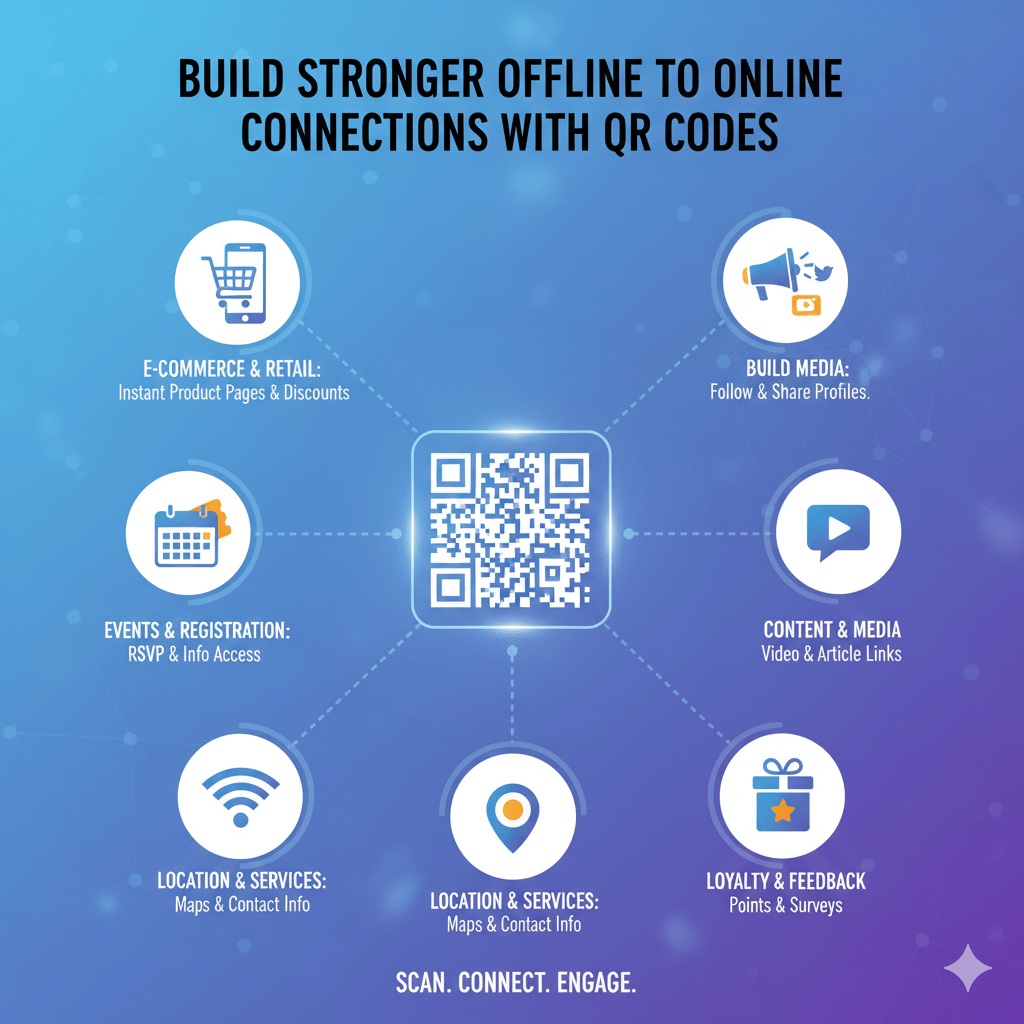
In today’s digital-first world, businesses often struggle to bridge the gap between offline interactions and online engagement. QR codes have emerged as a powerful solution, allowing users to move seamlessly from physical touchpoints to digital experiences. Whether it’s scanning a code on a product, poster, or receipt, QR codes make it easier than ever for brands to connect offline customers with their online platforms. In short, they’re the bridge that links the real world with the virtual one.
Why QR Codes Are the Key to Connecting Offline and Online Experiences
QR codes (Quick Response codes) are two-dimensional barcodes that can store URLs, contact details, or custom data. When scanned with a smartphone camera, they instantly take users to a website, video, app download page, or social media profile.
Here’s why QR codes are the ultimate bridge between offline and online engagement:
- Instant Access to Digital Content:
Users don’t have to type long URLs — scanning is faster, simpler, and error-free. - Universal Compatibility:
Every smartphone can scan QR codes, eliminating the need for specialized apps or tools. - Cost-Effective Marketing:
You can print QR codes on posters, flyers, packaging, or receipts without expensive tech investments. - Trackable Insights:
Dynamic QR codes provide real-time analytics — helping you track scans, locations, devices, and engagement times. - Customer Convenience:
QR codes improve the customer experience by removing friction between discovery and conversion.
QR codes have become an essential digital connector for brands that want to integrate physical marketing with digital engagement — a concept known as phygital marketing.
Core Strategies for Building Stronger Offline-to-Online Connections
Building meaningful connections between offline and online experiences requires more than just placing QR codes randomly. Here are some strategic approaches to maximize your impact:
1. Use Dynamic QR Codes
Static QR codes contain fixed data, while dynamic QR codes can be edited anytime without reprinting. They also enable tracking and analytics. Tools like QuitURL.com let you create dynamic QR codes that provide performance data — such as scan location, device type, and user behavior.
2. Match Offline Context with Online Experience
Ensure that your QR code leads to content relevant to the environment where it’s placed.
- A restaurant menu QR should open a digital ordering system.
- A retail flyer QR could take customers to an exclusive online discount page.
- A business card QR might direct users to a LinkedIn profile or digital portfolio.
3. Add Compelling Calls-to-Action (CTAs)
A QR code alone won’t drive engagement — your CTA matters. Use action-oriented phrases such as:
- “Scan to get 20% off”
- “Scan to watch our story”
- “Scan to join our community”
4. Integrate with Social Media Campaigns
Encourage users to scan QR codes to follow your brand, join giveaways, or access UGC (user-generated content). This creates an omnichannel connection where offline promotions boost online visibility.
5. Optimize Landing Pages for Mobile
Most QR code scans happen on mobile devices. Make sure your linked pages are mobile-responsive, fast-loading, and easy to navigate.
6. Personalize the Experience
Use QR codes with unique tracking URLs for different locations or campaigns. This allows you to personalize offers and analyze which offline sources bring the most engagement.
Business Use Cases for QR Codes
QR codes are incredibly versatile. Let’s explore how different industries use them to connect offline audiences with online destinations.
1. Retail
Retail stores print QR codes on product tags, receipts, and posters to:
- Share detailed product information
- Promote online discounts
- Collect customer feedback
- Encourage app downloads
2. Restaurants & Cafés
Menus are now digital. By scanning QR codes, customers can:
- View the menu instantly
- Place orders online
- Leave reviews or ratings
- Join loyalty programs
3. Events & Exhibitions
Event organizers use QR codes for:
- Contactless ticket entry
- Event registration
- Schedule details and live updates
- Sponsor promotions and digital brochures
4. Real Estate
Real estate agents place QR codes on property signs or brochures, linking to:
- Virtual tours
- Listing pages
- Agent contact info
5. Healthcare
Hospitals and clinics use QR codes to:
- Book appointments
- Provide access to patient information
- Deliver educational resources
6. Education
Universities and schools integrate QR codes into:
- Admission brochures linking to online applications
- Lecture materials or e-learning portals
- Campus tours
7. Marketing & Advertising
Marketers use QR codes on:
- Billboards and posters
- Product packaging
- Direct mail and print ads
Each scan becomes a digital doorway — turning offline curiosity into measurable online engagement.
How to Measure the Impact of Offline-to-Online Campaigns
Data-driven decision-making is key. Dynamic QR codes allow marketers to measure real-time performance and adjust strategies. Here’s how you can track success:
- Scan Analytics:
Measure total scans, unique visitors, repeat interactions, and scan trends over time. - Geolocation Tracking:
Identify which regions or stores generate the highest engagement. - Device & OS Data:
Understand whether users scan more on Android or iOS, and optimize accordingly. - Conversion Tracking:
Monitor how many scans lead to purchases, sign-ups, or app downloads. - A/B Testing:
Create multiple QR campaigns with different CTAs or landing pages to see what performs best.
Tools like QuitURL.com make this easy — providing in-depth tracking reports and analytics dashboards that simplify campaign measurement.
Security and Compliance Considerations
As QR code usage increases, ensuring security and privacy is crucial.
Here are a few key factors to consider:
- Use Trusted QR Code Generators:
Choose a reliable and secure platform like QuitURL.com that uses SSL encryption and secure redirect systems. - Avoid Direct File Downloads:
Never link QR codes directly to executable or unsafe files. Always redirect through a trusted domain. - Implement HTTPS URLs:
Make sure all QR-linked pages use HTTPS to protect user data. - Follow Data Privacy Regulations:
If you collect user information through QR-driven campaigns, comply with GDPR, CCPA, or other data protection laws. - Regularly Monitor for Phishing or Spoofing:
Scammers can misuse QR codes — educate your audience about scanning codes only from trusted sources.
Best Practices for Stronger Offline-to-Online Engagement
To make your QR-based campaigns successful, follow these best practices:
- Keep Design Simple and Scannable:
Avoid cluttered designs or low-contrast backgrounds. Test readability before printing. - Use Branded QR Codes:
Customize colors and add your logo to build brand trust and recognition. - Test Across Devices:
Always test your QR code on multiple smartphones before launching a campaign. - Update Links When Needed:
With dynamic QR codes, you can change destinations without reprinting — use this advantage for seasonal offers or updated content. - Educate Your Audience:
Not everyone understands QR codes — include clear instructions like “Open camera and scan the code.” - Combine with Analytics Tools:
Integrate Google Analytics or UTM parameters for more detailed tracking.
Create Seamless Offline-to-Online Connections with QR Codes
The beauty of QR codes lies in their simplicity and versatility. Whether you’re running a local campaign or managing a global brand, QR codes help merge the offline and online worlds smoothly.
By using a powerful platform like QuitURL.com — developed by Deep Thinkar LLC — you can generate dynamic QR codes, customize branded designs, track real-time analytics, and create secure, high-performing campaigns.
With QuitURL, marketers, business owners, and creators can finally bridge physical interactions with digital growth — turning every scan into a new customer opportunity.
Conclusion
QR codes are more than just black-and-white squares — they’re gateways to deeper engagement, stronger branding, and smarter marketing. From restaurants to real estate, businesses worldwide are using QR codes to connect offline audiences with online experiences.
By following the right strategies, using analytics tools, and prioritizing security, you can build campaigns that truly stand out. As the digital and physical worlds continue to blend, mastering offline-to-online connections with QR codes will give your business a clear competitive edge.