


QR codes have transformed the way businesses connect with customers, track engagement, and share information quickly. From marketing campaigns to product packaging, QR codes are everywhere. However, not all QR codes are created equal. Enterprises need to understand the differences between Static QR Codes and Dynamic QR Codes to choose the right strategy for their business.
While both types of QR codes serve the basic function of linking users to information, they differ significantly in flexibility, functionality, and analytics. Choosing the wrong type could limit your ability to track performance or make updates, costing your business valuable time and resources. In this article, we’ll break down everything enterprises need to know about static and dynamic QR codes, including their differences, benefits, use cases, and strategies to maximize ROI.
Do Static and Dynamic QR Codes Look Different?
At first glance, static and dynamic QR codes look very similar. Both consist of black squares arranged on a white background and can be scanned by any standard QR code reader or smartphone camera.
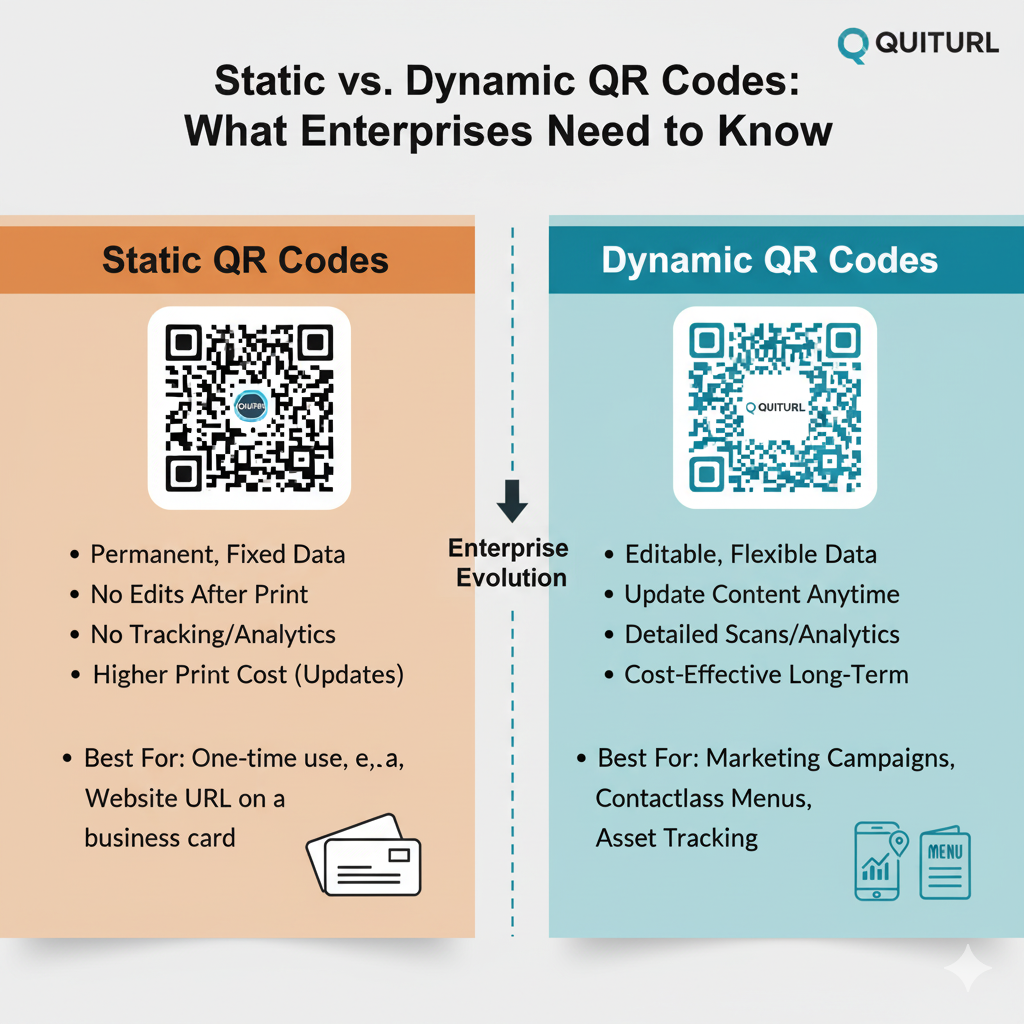
However, the primary difference isn’t in appearance but in functionality. A static QR code encodes information directly into the code itself, which cannot be changed after it is generated. In contrast, a dynamic QR code contains a short URL or redirect link, allowing the underlying information to be updated without changing the QR code’s appearance.
This subtle difference can have a huge impact on marketing flexibility, data tracking, and user experience.
What is a Static QR Code?
A Static QR Code is a fixed QR code where the information is permanently embedded. Once created, the data within it cannot be modified. Static QR codes typically link to URLs, plain text, email addresses, phone numbers, or other fixed information.
Key Characteristics of Static QR Codes:
- Permanent content: Once generated, the data cannot be changed.
- No tracking: Static QR codes cannot provide analytics on scans or user engagement.
- Simple and low cost: They are easy to generate and often free.
- Ideal for permanent content: Suitable for business cards, product labels, or contact details that won’t change.
While static QR codes are reliable for basic use cases, they lack the flexibility and tracking capabilities that businesses often need today.
What is a Dynamic QR Code?
A Dynamic QR Code is more advanced, offering the ability to change the linked content after the QR code has been printed or shared. Dynamic QR codes work through a redirect URL that points to a destination that can be updated anytime.
Key Characteristics of Dynamic QR Codes:
- Editable content: Update URLs or content even after the QR code has been printed.
- Trackable scans: Capture data such as the number of scans, locations, devices used, and times scanned.
- Advanced features: Supports A/B testing, password protection, expiration dates, and more.
- Optimized for marketing campaigns: Perfect for promotions, product launches, or any content that may change over time.
Dynamic QR codes are ideal for enterprises looking to leverage analytics, optimize campaigns, and maintain flexibility in their customer interactions.
7 Benefits of Dynamic QR Codes Over Static QR Codes
For businesses, dynamic QR codes offer several advantages that make them more suitable for modern marketing and operational needs:
- Flexibility to update content: Change the destination URL or information without creating a new QR code.
- Trackable analytics: Gain insights into user engagement, including location, time, device type, and frequency of scans.
- Better campaign management: Run multiple campaigns with a single QR code and redirect users to different pages based on marketing needs.
- Shortened URLs: Dynamic QR codes often use short URLs, which make scanning faster and reduce errors.
- Security features: Add password protection or expiration dates to control access to sensitive information.
- A/B testing capability: Test different landing pages and optimize marketing campaigns based on scan data.
- Cost-efficient over time: One dynamic QR code can serve multiple purposes, reducing printing and production costs.
Enterprises that want to measure ROI and optimize campaigns will find dynamic QR codes far more effective than static ones.
Examples of When to Use a Static or Dynamic QR Code
Choosing the right QR code type depends on your business needs and campaign goals.
When to Use a Static QR Code:
- Business cards: Share your contact information permanently.
- Product packaging: Provide permanent product details or instructions.
- Event posters: Share fixed event locations or phone numbers.
- Museum exhibits: Display static information about exhibits.
When to Use a Dynamic QR Code:
- Marketing campaigns: Redirect users to landing pages that may change over time.
- Promotions and discounts: Update offers without reprinting QR codes.
- Menu QR codes for restaurants: Change menu items seasonally or update prices.
- Event management: Track attendance and engagement for multiple events.
By aligning QR code type with your goals, you can improve user experience and maximize the value of each scan.
Common Use Cases: Static vs. Dynamic QR Codes
Static QR Codes Use Cases:
- Permanent URL or text information
- Contact details or vCards
- Fixed product manuals
- Location sharing
Dynamic QR Codes Use Cases:
- Marketing and advertising campaigns
- E-commerce promotions and discounts
- Customer feedback surveys
- Event registration and ticketing
- Tracking user engagement in offline campaigns
Dynamic QR codes are increasingly preferred by enterprises due to their adaptability, especially in campaigns that require real-time tracking and updates.
Static and Dynamic QR Code FAQs
Q1: Can dynamic QR codes be converted to static QR codes?
No, static QR codes are fixed, but dynamic QR codes can offer features that static QR codes cannot.
Q2: Are dynamic QR codes more expensive?
Dynamic QR codes may cost more due to advanced features and analytics, but they save money in the long run by eliminating the need for repeated printing.
Q3: Which QR code is better for marketing?
Dynamic QR codes are better for marketing campaigns as they allow updates, tracking, and optimization.
Q4: Can static QR codes expire?
No, static QR codes do not expire, but the content is unchangeable.
Q5: Is it possible to track static QR code scans?
No, static QR codes do not provide analytics. For tracking, dynamic QR codes are required.
Choose the Right QR Code Strategy for Your Business
When deciding between static and dynamic QR codes, enterprises should consider:
- Purpose of the QR code: Is the information permanent or likely to change?
- Need for analytics: Do you want to track engagement and user behavior?
- Marketing strategy: Are you running campaigns that need updates or A/B testing?
- Cost considerations: While dynamic codes may cost more upfront, they save resources over time.
For permanent, simple uses, static QR codes are sufficient. For flexible, trackable, and interactive campaigns, dynamic QR codes are the smarter choice. Enterprises should also consider integrating QR codes with CRM and marketing automation tools to fully leverage data insights.
Conclusion
QR codes have become essential tools for modern enterprises. Understanding the difference between static and dynamic QR codes is critical for maximizing their impact.
- Static QR Codes are ideal for permanent, unchanging information and are cost-effective.
- Dynamic QR Codes offer flexibility, tracking, and advanced features that make them indispensable for marketing campaigns, promotions, and real-time updates.
By choosing the right QR code strategy, enterprises can improve customer engagement, streamline campaigns, and gain valuable insights. Whether you’re a small business or a large corporation, understanding these differences ensures your QR code strategy aligns with your business goals and drives measurable results.