


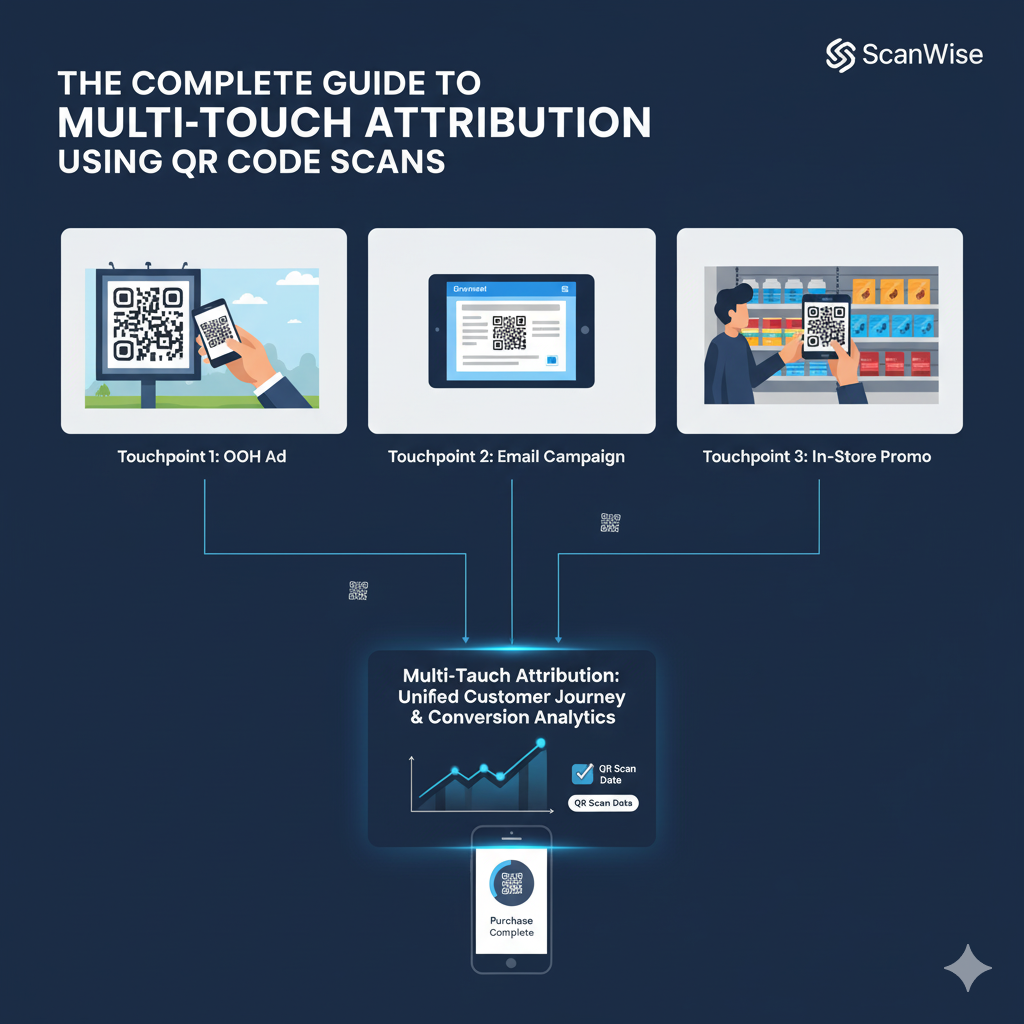
Understanding how customers interact with your brand across multiple touchpoints is essential for effective marketing. Multi-touch attribution provides insights into which marketing channels contribute most to conversions, helping marketers optimize campaigns and allocate budgets efficiently. QR Codes have emerged as a powerful tool in this process, enabling precise tracking of engagement across both digital and offline channels. In this complete guide, we’ll explore multi-touch attribution, how QR Codes enhance it, and practical strategies to set up, analyze, and optimize campaigns for maximum impact.
What is Multi-Touch Attribution?
Multi-touch attribution is a marketing measurement approach that assigns credit for conversions to multiple touchpoints throughout a customer’s journey. Unlike single-touch attribution, which only credits the first or last interaction, multi-touch attribution provides a more comprehensive view of the marketing funnel. Key touchpoints can include:
- Social media ads
- Email campaigns
- Website visits
- QR Code scans
- In-store promotions
By understanding how each touchpoint influences conversions, marketers can make data-driven decisions to improve campaign performance.
Why is Multi-Touch Attribution Important for Marketers?
Multi-touch attribution is crucial because it:
- Reveals the complete customer journey: Understand how prospects interact with multiple channels before converting.
- Optimizes marketing spend: Identify which channels deliver the highest ROI.
- Improves campaign performance: Adjust messaging and touchpoints based on data-driven insights.
- Supports personalization: Tailor offers and content based on engagement patterns.
Without multi-touch attribution, marketers risk overvaluing certain channels while undervaluing others, leading to inefficient campaigns.
How QR Codes Enhance Multi-Touch Attribution
QR Codes bridge the gap between offline and online marketing, providing measurable touchpoints that can be tracked and analyzed. Here’s how they enhance multi-touch attribution:
- Track offline engagement: Scan activity from posters, packaging, or events can be linked to online conversions.
- Unique campaign IDs: QR Codes can be customized for specific campaigns, allowing precise attribution.
- Real-time data: Instantly monitor user interactions to assess campaign effectiveness.
- Integration with CRM: Sync QR Code data with platforms like Salesforce for end-to-end journey analysis.
By including QR Codes in your marketing mix, you can capture engagement that traditional digital metrics might miss, providing a fuller picture of your customer journey.
How to Set Up QR Codes for Multi-Touch Attribution in Marketing Campaigns
- Define campaign objectives: Identify the goals and touchpoints you want to track.
- Generate unique QR Codes: Use a tool like QuitURL to create trackable QR Codes for each campaign or channel.
- Link to dedicated landing pages: Ensure each QR Code directs users to a unique landing page to track behavior.
- Integrate with analytics platforms: Sync QR Code scan data with Google Analytics, CRM systems, or attribution platforms.
- Assign multi-touch credits: Determine how each scan contributes to overall conversions based on your attribution model.
- Monitor and refine: Analyze scan data and optimize campaigns to maximize ROI.
Can You Integrate QR Codes Into Existing Multi-Touch Attribution Models?
Yes. QR Codes can complement your existing attribution models by:
- Adding offline engagement data to digital campaigns
- Enabling UTM parameter tracking for unique QR Codes
- Feeding scan activity into your CRM or marketing automation platform
- Supporting both linear, time-decay, and algorithmic attribution models
Integrating QR Codes ensures that every interaction, whether online or offline, is considered in your multi-touch analysis.
Tips for Analyzing QR Code Data for Attribution Insights
- Segment by source: Track which campaigns, locations, or channels generate the most scans.
- Analyze user behavior: Observe actions taken after scanning, such as purchases or sign-ups.
- Compare offline vs. online touchpoints: Determine the relative influence of physical marketing materials.
- Optimize campaigns: Adjust placement, messaging, or design based on scan performance.
- Visualize the customer journey: Map QR Code interactions alongside other touchpoints to identify patterns.
Effective analysis allows marketers to make informed decisions and continually refine their attribution strategy.
Examples of Successful Multi-Touch Attribution With QR Codes
- Retail Campaigns: QR Codes on product packaging link to online offers, enabling marketers to measure offline-to-online conversions.
- Event Marketing: Attendees scan codes at booths or sessions, contributing to lead scoring and engagement tracking.
- Restaurant Promotions: QR Codes on tables track interactions with menus, feedback forms, and loyalty program sign-ups.
- E-commerce: QR Codes in email campaigns track which offline touchpoints drive traffic to specific landing pages or promotions.
These examples highlight the versatility of QR Codes as a multi-touch attribution tool across industries.
Conclusion
Multi-touch attribution is essential for marketers looking to understand the full impact of their campaigns. By incorporating QR Codes into your strategy, you can capture both offline and online engagement, measure customer interactions more accurately, and optimize marketing efforts for higher ROI. Tools like QuitURL make it simple to generate, track, and analyze QR Codes, ensuring every touchpoint contributes to a comprehensive understanding of the customer journey. By embracing QR Code-enabled multi-touch attribution, marketers can make smarter, data-driven decisions and deliver more effective, personalized campaigns.