


QR codes have become a powerful tool in modern advertising, bridging the gap between offline and online marketing. From print ads and billboards to product packaging, QR codes allow consumers to instantly access websites, promotions, or apps with just a scan. But like any marketing tool, QR codes come with both advantages and drawbacks. This guide explores the pros and cons of ads with QR codes, best practices for using them effectively, and why QuitURL is the best QR code generator to supercharge your campaigns.
TL;DR Summary
QR codes in advertising make it easy for consumers to access online content instantly, improving engagement and tracking capabilities. Pros include convenience, measurable results, and cost-effectiveness. Cons involve potential low adoption, dependence on smartphones, and design challenges. Using tools like QuitURL, advertisers can create dynamic, branded QR codes with analytics to maximize ROI.
Why Advertisers Are Using QR Codes in Ads
QR codes are increasingly popular because they provide a seamless connection between offline and online channels. Here’s why advertisers love them:
- Instant Access: Consumers can scan a QR code and immediately reach a website, app, or promotion.
- Trackable Results: QR codes allow marketers to measure engagement, track conversions, and analyze audience behavior.
- Cost-Effective: Printing QR codes is inexpensive compared to other digital campaigns.
- Versatile Applications: From posters, magazines, and flyers to packaging and in-store displays, QR codes fit anywhere.
- Encourages Interaction: QR codes engage users by offering discounts, contests, videos, or additional information.
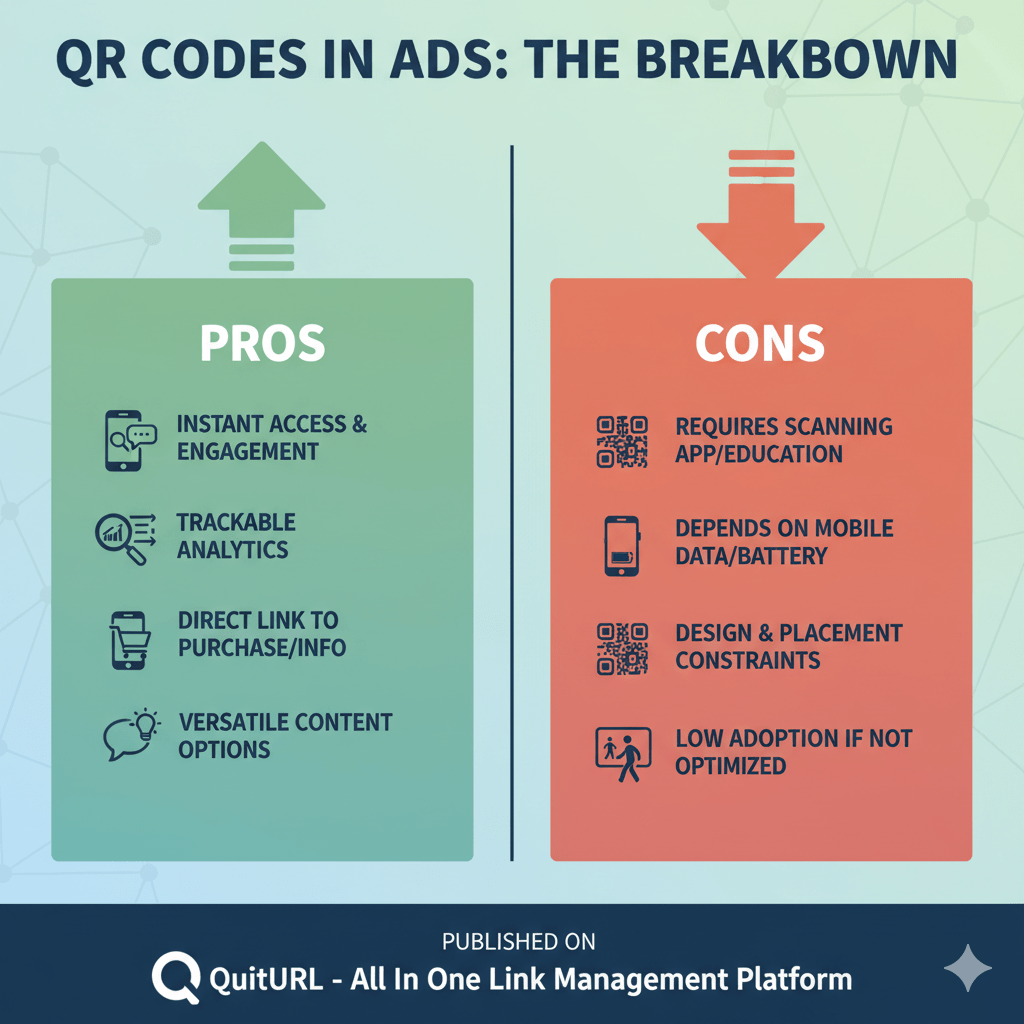
Pros of Using QR Codes in Advertising
- Enhanced Engagement: QR codes encourage users to interact with ads, boosting engagement metrics.
- Convenience for Consumers: With smartphones in nearly every pocket, accessing online content via QR codes is fast and effortless.
- Trackable Performance: Advertisers can monitor scan rates, location data, and device usage to optimize campaigns.
- Flexible and Dynamic Content: Dynamic QR codes allow marketers to update the destination URL or content without reprinting the code.
- Cost Savings: QR codes are a budget-friendly way to connect offline materials with online marketing channels.
- Supports Multi-Channel Campaigns: QR codes can be combined with social media, email, or other digital campaigns to amplify results.
Cons of Using QR Codes in Advertising
- Requires Smartphone Access: Users need a smartphone with a camera and internet connectivity to scan codes.
- User Awareness: Not all consumers are familiar with QR codes or willing to scan them.
- Design Constraints: Poor placement or small codes can make scanning difficult.
- Security Concerns: Scammers can create malicious QR codes, making trust a potential issue.
- Dependency on Engagement: If an ad lacks a compelling reason to scan, the QR code might go unnoticed.
Best Practices for Using QR Codes in Ads Effectively
- Place QR Codes Strategically: Ensure they are visible and accessible on billboards, posters, or packaging.
- Include a Clear Call-to-Action (CTA): Tell users what to expect after scanning, e.g., “Scan to Get 20% Off.”
- Use Dynamic QR Codes: Update content without reprinting, keeping campaigns fresh and relevant.
- Optimize Landing Pages: Ensure the landing page is mobile-friendly and loads quickly.
- Track Performance: Use analytics to measure scans, locations, and engagement patterns.
- Brand Your QR Codes: Customize colors, logos, and design to align with your brand identity.
QR Code Advertising FAQs
Q1: Can QR codes work offline?
No, QR codes typically require an internet connection to redirect users to online content.
Q2: How can I make QR codes more appealing in ads?
Use custom colors, logos, and shapes to make codes visually attractive and aligned with your brand.
Q3: Are dynamic QR codes better than static ones?
Yes, dynamic QR codes allow you to update the destination URL and track analytics without reprinting the code.
Q4: How do I measure the success of QR code ads?
Use QR code generators like QuitURL to access scan data, geo-location, and device information.
Elevate Your Advertising Strategy With QR Codes
When implemented correctly, QR codes can transform your advertising strategy. They connect offline marketing with digital engagement, providing measurable and trackable results while enhancing consumer experience. Whether your goal is to boost sales, capture leads, or provide interactive experiences, QR codes are a versatile and cost-effective solution.
Why QuitURL is the Best QR Code Generator
QuitURL stands out as the ultimate tool for advertisers aiming to leverage QR codes effectively. Here’s why:
- Dynamic QR Codes: Update links anytime without reprinting.
- Analytics Dashboard: Track scans, engagement, locations, and device types in real-time.
- Custom Branding: Match QR codes to your brand colors and logos.
- Geo-Targeting: Deliver location-specific content to users scanning your QR code.
- Multi-Use Integration: Combine QR codes with landing pages, links, or campaigns for maximum impact.
With QuitURL, advertisers can create QR codes that are not only functional but also visually appealing, trackable, and adaptable—making it the best QR code generator for ad campaigns.
Conclusion
Ads with QR codes offer a unique blend of convenience, engagement, and measurable results, making them an indispensable tool for modern marketers. While there are challenges such as user awareness and design constraints, best practices and tools like QuitURL make it easy to overcome these issues. By incorporating QR codes into your advertising strategy, you can bridge the gap between offline and online marketing, provide interactive experiences, and elevate your campaigns to a new level of effectiveness.